Friday, February 24, 2017

Stuck inside of Volubilis with the Chefchaouen blues again.


We left Fez on a beautiful morning.


We had hired a taxi to take us on the three-and-a-half hour journey to the blue city of Chefchaouen. It was almost as cheap as taking the train and much more convenient. Our driver spoke pretty good English and gave us a running commentary as we motored through the green rolling hills of northern Morocco.


We sped past beautiful little hill towns.


And made a long stop at the ruins of the old Roman city of Volubilis.


Volubilis was a major trading hub for the Romans, providing a conduit for products from the far interior of Africa: wild animals for the games, foodstuffs, and exotic woods and spices. The site is physically beautiful and fairly well preserved.


You can still see how the city was laid out, with an administrative center, temples, and residential areas.


In some of the houses, the mosaic floors are still intact.

Many of the mosaics feature marine animals, even though the city is quite far from the coast.


Apparently they weren't quite clear on how to ride a horse.

And that must have played a lot of baseball.


The grist mill has been partially restored.


Locals have pillaged the site for building materials, but not as much as they would have if the city was closer to modern settlements. And that distance from the modern world also keeps it from being overrun by tourists.


We'd heard a lot about the blue city of Chefchaouen and were looking forward to visiting. On first glance, not so blue.


But after our taxi dropped us off at the main square and we rolled our luggage up the steep, narrow streets toward our riad, the blue grew.

P.

Puttin' on the Fez.

We spent a couple days exploring Fez. There's lot to explore. The medina and the souks are some of the most vibrant in Morocco. And as befits the "cultural capital of Morocco," there are many historic buildings, palaces, and a beautiful medieval madrassa to visit.

The famous Blue Gate is the main entrance to the medina.


There are a myriad of wonderful doors.


The intricate designs in wood and stone that decorate the walls and ceilings of the old buildings are testament to the amazing craftsmanship of generations of Islamic artists.


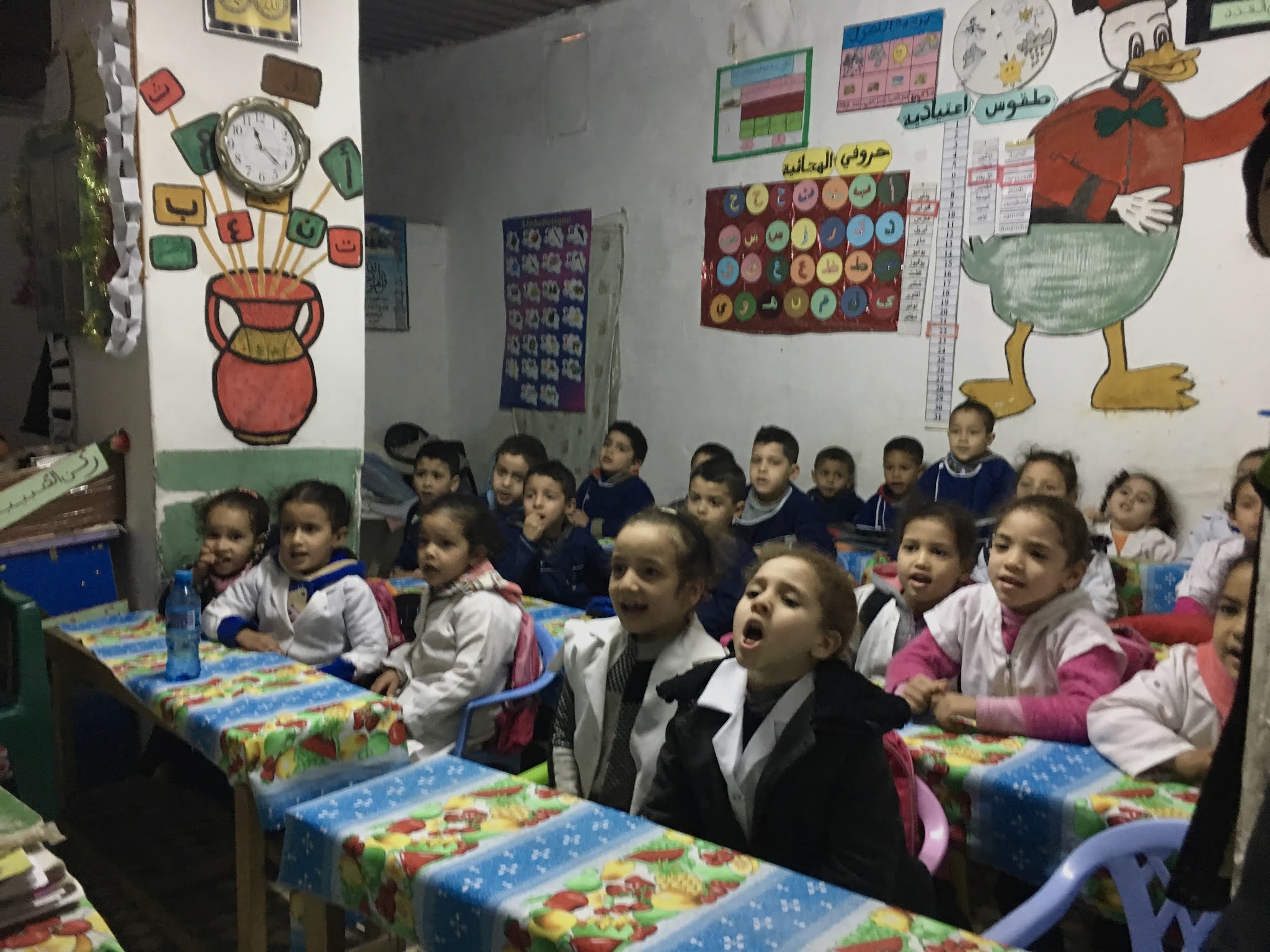
We visited a school and watched the children learning to read.


Badly-painted "Disney" art seems to be a staple in schools worldwide.


Like the ubiquitous Disney princess paraphernalia.


The narrow alleys are crammed with people selling and buying produce and household goods. Except fo the clothes, we could almost be back in Vietnam.


But the huge population of cats is pure Morocco.


There are lots of other animals in the medina as well. Horses and donkeys still provide much of the transportation.


And it's easy to walk home with a brace of colorful chickens.


As in Vietnam, we were impressed with the abundance and quality of the foodstuffs on offer.


Delicious marinated olives in assorted flavors. There are numerous stalls selling fish and meat and spices as well.


Satisfying your sweet tooth is easy, too, with these tasty nougats made with local honey and stuffed with nuts.


Or a vast array of dried fruits.


He is the eggman.


You can also stop at a star for a cup of Moroccan mint tea with plenty of sugar.


Or a snack of fresh-baked bread.


No visit to Fez would be complete without a is it to the famous tanneries. 


The smell from the tanning vats is pretty horrific most days, but we observed from a distance, upwind, with a lovely fresh spring breeze protecting us for the worst of it.


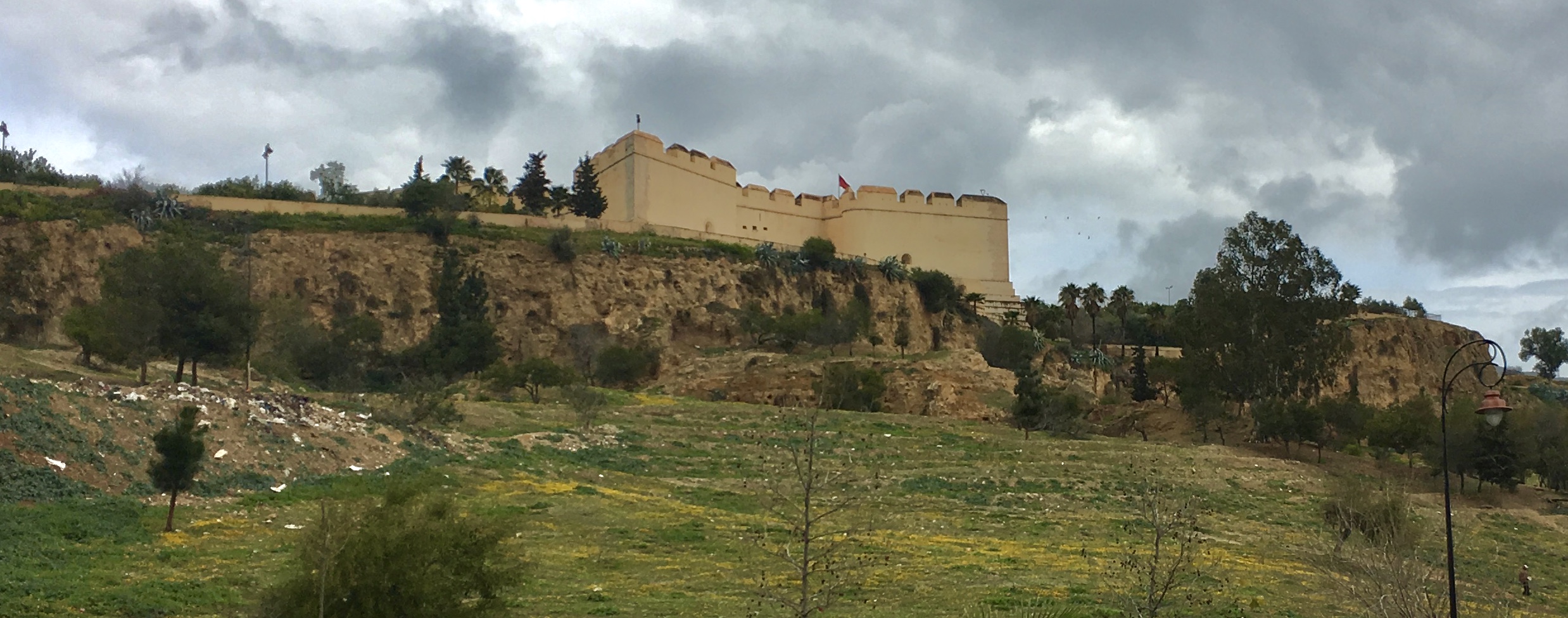
On our last day, we took a long walk outside the walls of the medina to visit some of the ruins surrounding the city.


These are the remains of the old forts that used to guard the approaches to the city.


We visited a crowded old cemetery.


It was overrun by goats.


Along the way there were many lovely vistas of the city.


And plenty more goats.

P.


Thursday, February 23, 2017

A Palace in Fez.


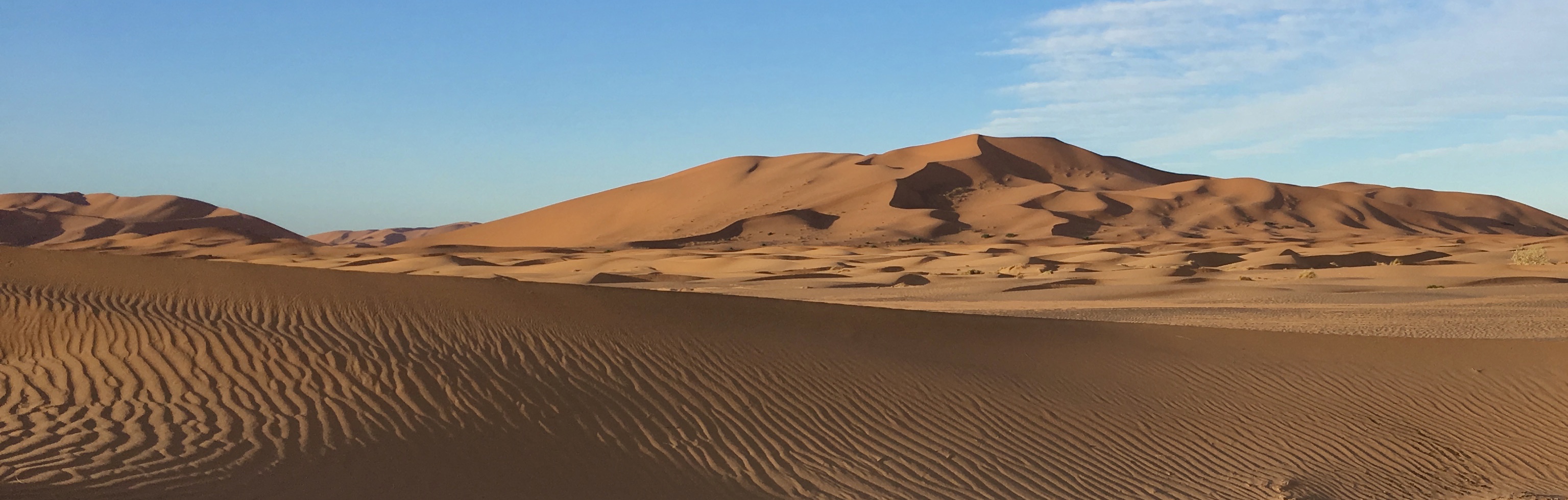
The next morning we were up at dawn to see the sun rise over the desert.

The horizontal light threw every crenelation of the sinuous terrain into bold relief.


The formerly blank sand now detailed the nocturnal wanderings of birds and animals.


There is water, even here.


You just have to dig for it.


As we drove out of the desert, the landscape began to resemble that of Nevada or Arizona.


Then the south side of the Atlas Mountains appeared in the distance. Our destination was on the other side: Fez.


The landscape slowly began to green as we climbed into the foothills.


Finally becoming alpine with lakes and forests.


At last we arrived at our hotel, Palais Sheherazade, in the heart of the Fez medina.


This grand Arabo-Andalousian palace was built by the Moroccan Vizir of Finance in the 19th century as his main residence. It features a spacious open-air interior courtyard with water and lush vegetation.


The rooms are suitably palatial. 


The ceilings and fixtures are exquisitely detailed.


There's another courtyard and pool inside the main building.

And best of all, it carries the imprimatur of the Master Hotelier himself.

P.