Saturday, May 30, 2020

My Musical Journey. Part 6: Aftermath.

I wasn't really into pop/rock in high school. I much preferred folk/roots music to what I heard as bubblegum music. I thought Elvis was a greasy, doughy hick. The Beatles were a teenybopper scream dream. 

But Bob Dylan's electrifying turn to rock instrumentation aroused my curiosity. And then, sitting in the parking lot at Orange Coast College waiting for class one day, I heard "Paint It, Black." I rushed out and bought "Aftermath." It was the first rock album I ever bought.
"Paint It, Black" is such a dark, angsty song that I immediately fell in love with the Rolling Stones. It was years before I found out what the song was actually about. As much as I now love the Beatles, (I even learned to appreciate the early Elvis) I have always preferred the Stones' blues-rooted rock to McCartney's music hall pop.
I still love their smart, sarcastic lyrics. And though Jagger is sometimes a parody of himself, Keith and Charlie keep them grounded and rocking hard, even into their 70s!
Not all their songs or even their albums are great, but they have amassed an unmatched catalog of incredible songs over the years. They are still the greatest rock-and-roll band in the world.
P.

Saturday, May 23, 2020

My Musical Journey. Part 5: The Times They Are A'changing.

My love for folk music led inevitably to Bob Dylan. I was immediately drawn to his iconoclasm, his dry, bitter, sometimes silly sense of humor, his seeming unschooled voice, his visionary poetry, and his rage at the injustices of 50s and 60s America.

And just I grew bored with the droning sameness of most folk music, Dylan made a radical change, embracing electric instrumentation, much to the outrage of more traditional folkies. I loved it.


Highway 61 Revisited is still one of my all-time favorite albums. It features some of his greatest lyrics and the accompaniment of some of the most interesting musician of the time: Al Cooper with his jazz-inflected keyboards and Michael Bloomfield with his endlessly inventive blues guitar riffs. Blonde On Blonde is a close second--Visions of Johanna is probably my favorite Dylan song.

Friday, May 22, 2020

My Musical Journey. Part 4: Giant Steps--John Coltrane

I had listened to jazz fair amount when I discovered Coltrane in my mid-teens. "Giant Steps" was the first album of his I listened to and it really opened my mind and my ears to what jazz was about. “Coltrane says of Giant Steps that it gets its name from the fact that ‘the bass line is a kind of loping one. It goes from minor thirds to fourths, kind of a lop-sided pattern in contrast to moving strictly in fourths or in half-steps.’ Tommy Flanagan’s relatively spare solo and the way it uses space as part of its structure is an effective contrast to Coltrane’s intensely crowded choruses.” --Nat Hentoff, original liner notes. Sure the technical stuff is interesting, but what moved, and still moves me is the sheer jumping, soaring joy of it. The man had a mighty spirit and a mighty heart. I think I have every album he ever made, and I love them all, from his early more traditional efforts to his soulful cosmic wailings suffused as they are with joy and pain and rage and love. P.

Thursday, May 21, 2020

My Musical Journey. Part 3: Classical Music.

My mom introduced me to classical music at an early age. Her tastes ran toward the romantic—lots of Tchaikovsky and Chopin. That music is deep in my cells, even if it’s not entirely to my taste these days.

One vein of classical music that I enjoyed early and still love today is classical guitar . My mother’s father was an accomplished classical guitarist, and since he and my grandmother lived nearby, I heard him play Bach and many of the Spanish masters a lot. Andres Segovia was my grandfather’s idol, so we also listened to Segovia’s records over and over.


In my early teens I discovered Beethoven, who I still love. I was also exploring Norse mythology at the time, so I was drawn to Wagner’s Ring Cycle. These days I find his music ponderous and turgid, but at the time I was enamored of sheer scope of his romantic vision.


And then I discovered Bela Bartok’s Contrasts for Violin, Clarinet and Piano. It changed my world. Music that was both cerebral and emotional, without falling into sentiment. I loved the way the instruments interacted with each other, like a conversation between people with different voices and different ideas. 


I next discovered his foreboding Concerto for Orchestra, still one of my favorite pieces of orchestral music.  


P.

Wednesday, May 20, 2020

My Musical Journey. Part 2: Soundtracks.

The first movie I ever saw was Walt Disney’s 1954 version of “Twenty Thousand Leagues Under the Sea’ with Kirk Douglas, James Mason, and Peter Lorre. I managed to persuade my mother buy me the 45 of Kirk Douglas singing “A Whale of a Tale” from the movie, and I pretty much wore the record out. 

Here's the clip.


In my early teens, I began to buy more sophisticated soundtrack albums. It particularly loved the themes from “Exodus” and “Mutiny on the Bounty.” I then got hooked on the Bond movie soundtracks — “From Russia With Love,” “Goldfinger,” and “Thunderball.” I especially loved the Jamaican-influenced soundtrack from “Dr. No,” which led me to calypso music and Harry Belafonte and set up my later attraction to reggae music.

My Musical Journey. Part 1: Folkways Records


I’ve been thinking a lot about music during this long period of isolation. Specifically, about the music I’ve discovered over the years that has changed and shaped my musical tastes. Over the next days and weeks, I’d like to share my musical journey and I’d love to hear about yours. 


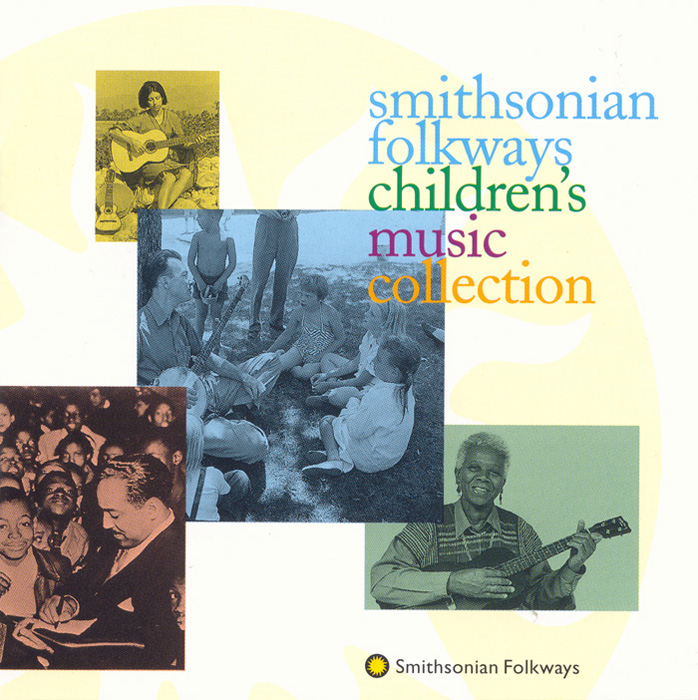
Smithsonian Folkways Children's Collection


As a kid I had a small portable record player in my room that played 78 and 45 rpm records.

The first records I remember playing were children’s songs from a series of records put out by the Folkways label. My mom subscribed to the series, and once a month I'd get a new record. The songs were mostly classic folksongs like “Polly Wolly Doodle” and “Oh, Susanna.” Folkways had a decidedly leftist bent, so there were also a lot of work songs like “I’ve Been Working on the Railroad.” Woody Guthrie sang “This Land is Your Land.” Pete Seeger sang “All You Lucky Campers” and “Blow Ye Winds.” 

As I got older, I graduated to 33 rpm and started listening to folk music and protest songs.

P.


Saturday, March 28, 2020

Quarantine Fun!


Though we have lots of projects to do around the house, the hours do stretch out as we attempt to survive the Great Pandemic of 2020.

Here's a fun little time-killer: what bands have you seen in your lifetime?

My list turned out to be quite a bit more extensive than I anticipated. Especially the jazz section.


Bands I have seen

Blues/Funk
Albert Collins
Albert King
Alberta Hunter
Alvin Youngblood Hart
Big Mama Thornton
Charmaine Neville
Blind Boys of Alabama
Bo Diddley
Buddy Guy
The Chambers Brothers
Denise LaSalle
Etta James
Fairfield Four
James Brown
James Cotton Blues Band
Joe Lewis Walker
Johnny Otis
Mike Bloomfield
Muddy Waters
Paul Butterfield Blues Band
Robert Cray
Taj Mahal

Rock
Alice Cooper
The Animals 
The Bevis Frond
Blue Cheer
The Byrds
Cadillac Tramps
Canned Heat
Chuck Berry
Country Joe and the Fish
The Crazy World of Arthur Brown
Crosby, Stills, Nash & Young
The Doors
Dr. John the Night Tripper
Drywall
Dweezil  Zappa
The Electric Flag
The Flying Burrito Brothers
The Flying Lizards
The Grass Roots
Grateful Dead
Illinois Speed Press
Iron Butterfly
Jefferson Airplane
The Kinks
Los Lobos
Merry Go Round
Mickey Hart
Nashville Pussy
Oingo Boingo
Quicksilver Messenger Service
Reverend Horton Heat
Rolling Stones
Santana
Sha-Na-Na
Sister Double Happiness
Sleater-Kinney
Sonny and Cher
Steppenwolf
Things To Come
Tiny Tim
Velvet Underground

Punk
Butthole Surfers
The Clash
Dead Kennedys
Dropkick Murphys
Fear
Gogol Bordello
Hatebreed
Joe Strummer and the Mescaleros
Molotov
The Ramones
Rancid
Social Distortion
Tiger Lillies
Violent Femmes
X

Reggae/Ska
Alpha Blondy
Bob Marley
The Selecter

Country/Folk/Cajun
Alison Krauss
Bill Monroe
Buck Naked and the Bare Bottom Boys
Buck Owens
Buddy and Julie Miller
Chris Smither
Clive Carroll
David Grisman
Doc Watson
Emmylou Harris
Gillian Welch
Hot Club of Cow Town
Johnny Cash
Junior Brown
Mamou
Merle Haggard
Osbourne Brothers
Ralph Stanley
Willie Nelson
Jazz
Afro Blues Quintet
Alice Coltrane
Anthony Braxton
Anthony Coleman
Astrud Gilberto
Avery Sharpe
The Bad Plus
Bill Frisell
Bill Laswell
Billy Tipton Memorial Saxophone Quartet
Bitches Brew
Bola Sete
Broun Fellinis
Buddy Rich
The Budos Band
Cab Calloway
Cal Tjader Quintet
Cecil Taylor
Charles Lloyd
Compostela
Courtney Pine
Craig Taborn
Dave Brubeck
David Murray
David S. Ware
Duke Ellington
Fanfare Ciocarlia
Fred Ho and the Monkey Orchestra
Gli Evans Orchestra
Hiromi
Industrial Jazz Group
James “Blood” Ulmer
Jan Garbarek
The Jazz Crusaders
Jenny Scheinman
Joe Zawinul
John Handy
John McLaughlin
Jon Hendricks
Joshua Redman
Keith Jarrett
Lizz Wright
Matmos
Matthew Shipp
McCoy Tyner
Michael Brecker
Michael Ray and the Cosmic Krewe
Miles Davis
Modern Jazz Quartet
Music Revelation Ensemble
Ornette Coleman
Peter Apfelbaum
Peter Brotzmann
Pharoah Sanders
Odean Pope
Roscoe Mitchell
Salvation Air Force
School Days
Sonny Simmons
Trilok Gurtu
Vandermark Five
Vince Guaraldi Trio
Vi Reed
Wadada Leo Smith
Wayne Shorter

I know there are others that I have forgotten, but that's pretty close.

What does your list look like?

P.

Friday, March 3, 2017

The hookah of Seville.

Spanish Spanish is quite different than Mexican Spanish. Mostly we can understand despite the accent, if we can get them to speak slowly. But the Castilian lisp takes some getting used to.

I ordered a cup of espresso at a little cafe one afternoon, and the barista asked me if I wanted a hookah. I was a bit baffled, so I asked him to repeat. "A hookah?" he asked again. It took me a long second to realize that he was asking me with a very pronounced Castilian lisp if I wanted "ahuca." Azucar: sugar. 
No. No hookah for me, grathias.


Sevilla is a beautiful town very much built to human scale. There are no high rises, and the pace of life is relaxed.

It's very pedestrian-friendly. We took walking tours of the city that were quite informative. Unfortunately, the last day O got sick and missed the last tour.


The bull ring is still a going concern. Having a box here for the season is like having a box at the Met in New York--a marker of high status.

We toured the Real Alcazar, the royal palace of the rulers of Sevilla back when the city was the capital of its own country. Built for the Christian king Peter of Castile by Castilian Christians on the site of an Abbadid Muslim alcazar, or residential fortress destroyed after the Christian conquest of Seville. The upper stories of the Alcázar are still occupied by the royal family when they are in Seville.


The palace is a preeminent example of Mudéjar architecture in the Iberian Peninsula but features Gothic, Renaissance and Romanesque design elements from previous stages of construction. 

When the palace was built, just after the Reconquest, the best architects and artisans available were Muslim, so the resulting structure is mainly built with Islamic design features. 

The palace gardens are lushly planted and incorporate many beautiful water features.


Fanciful Italian tile works enlivens the interior.

Los Baños de Doña María de Padilla. These beautiful baths below the palace offer cool water for bathing, even when the weather is hot.


Legend has it that this little balcony is the one where Count Almaviva and Figaro courted Rosina in Act II of The Barber of Seville. Unlikely, since the opera was based on a French comic novel, but who knows, maybe Rossini was charmed by this picturesque location and so included it in his libretto.


Sevilla's warm Mediterranean climate brings forth a profusion of color even in early March. I'm convinced that the pleasant climate contributes much to the easy-going ambiance of the city.


Sevilla's Cathedral of Saint Mary is the largest Gothic church in the world. It was completed in the 1500s, at the peak of  Sevilla's power as the main conduit for the wealth of Spain's colonial empire.


La Giralda, the cathedral's bell tower, was originally the minaret of Sevilla's main mosque.


It was built to resemble the minaret of the Koutoubia mosque that we saw in Marrakech. 


The cathedral houses the grandiose tomb of Christopher Columbus as well as those of various Spanish royalty.


The builders spared no expense is making the cathedral as ostentatious as possible. Local tradition has it the the designers' guiding principle was "Let us build a church so beautiful and so grand that those who see it finished will take us for mad."

You might say they lost their heads.


And after all the miles of walking, they have gin.


The sun was setting as I walked back to our hotel. O was feeling a bit better, and it was time to rent a car and head for Málaga.

P.


Tuesday, February 28, 2017

Out of Africa.


Tanger looked much more attractive from the deck of the ferry to Spain. The dismal overcast had parted, and the sun sparkled gaily on the white buildings.


From the ferry, you can get a good idea how close Africa and Europe are to each other. Spain is on the left.


Jesus welcomes us to the harbor in Tarifa.


Our hotel had a lovely patio.


The weather was brisk and windy. Great for kites, not so great for swimming.


There were a lot of kites.


The old customs house and fortifications.


The Island of Doves marks the transition from the Atlantic to the Mediterranean.


All the fun spots were closed for the season.


It was a profound relief to get back to pork and alcohol. 


There are even bars for children, apparently.

P.

Monday, February 27, 2017

Among the Tangerines.


Thus far Morocco had greatly exceeded our expectations. We loved the people, the food, and the varied beauty of the country. So we were excited to visit the famous port city of Tanger. Alas, it failed to live up to the hype. It was gray and grimy and not at all appealing. Still, we did find things to like.


O came with me to the Casbah.

Our hotel was quite nice, with a good view of the harbor. Too cold to swim in the pool, though.

The outdoor markets were significantly less vibrant than those in other cities.


There was, however quite a lot of interesting street art.


And beautiful old doors.

The old fortress still sports the original cannons.

We ate a good lunch at Café Hafa. Open since 1921, the café  was a favorite haunt of the Beatles and the Stones in the 60s. 

The café's many terraces offer sweeping views of the Bay of Tanger and the Straits of Gibraltar. We could just make out the Spanish coast in the distance. 


The weather cleared just enough to allow for a gorgeous sunset, our last in Africa. We were sorry to leave Morocco, but looking forward to our return to Spain.

P.